History
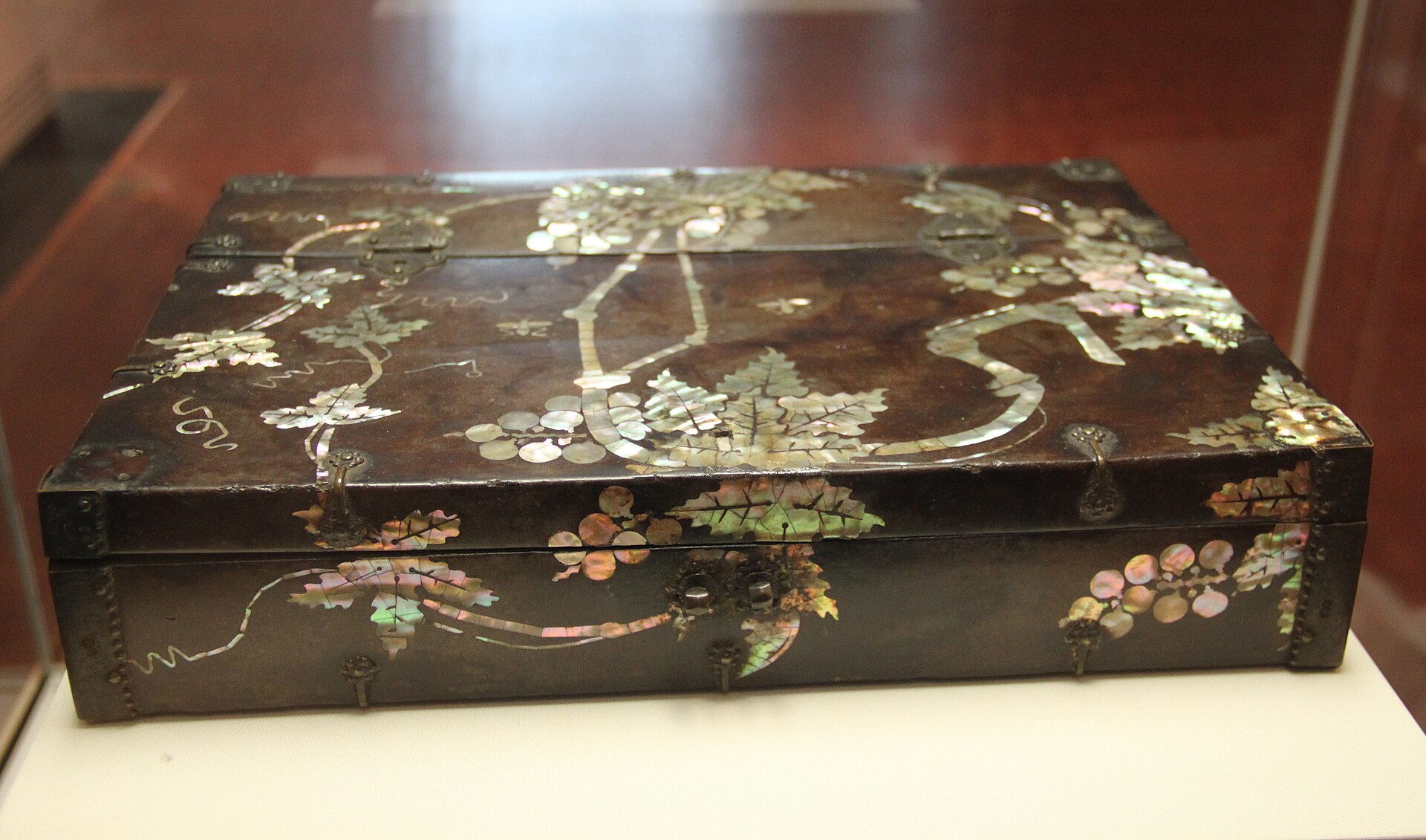
Najeon chilgi — lacquerware inlaid with mother-of-pearl — is one of Korea's most exacting crafts: iridescent shell, cut and set into black lacquer until a box or a chest seems to hold light inside it. The technique arrived with lacquer and inlay traditions shared across East Asia, but by the Goryeo dynasty (918–1392) Korean artisans had made it unmistakably their own, producing sutra boxes and small cases so refined they were sent abroad as royal gifts and are treasured in museums to this day.
The work is painstaking. Thin slices of abalone or conch shell are cut into slivers and blossoms, laid onto a wooden form, and sealed under many coats of ottchil, the sap of the lacquer tree, each layer polished before the next. Under Joseon the craft moved from Buddhist objects into the furniture of daily life, and the southern port of Tongyeong became its great center, its workshops supplying the country with inlaid treasures.
Where it fits
In the Korean home, najeon pieces were the quiet luxuries: a bride's wardrobe chest, a sewing box, a jewelry case, a low table — heirlooms that marked a milestone and were meant to last generations. The shell was worked into motifs that carried wishes: cranes and pines for long life, lotus for purity, peonies for wealth and honor, so that the object blessed the household even as it adorned it.
For many Korean American families, a mother-of-pearl box is the piece of home that made the journey — set on a dresser or shelf, holding rings and letters, catching the light in a new country. Prized by collectors and still made by master artisans today, najeon chilgi remains a living emblem of Korean patience, beauty, and care.